
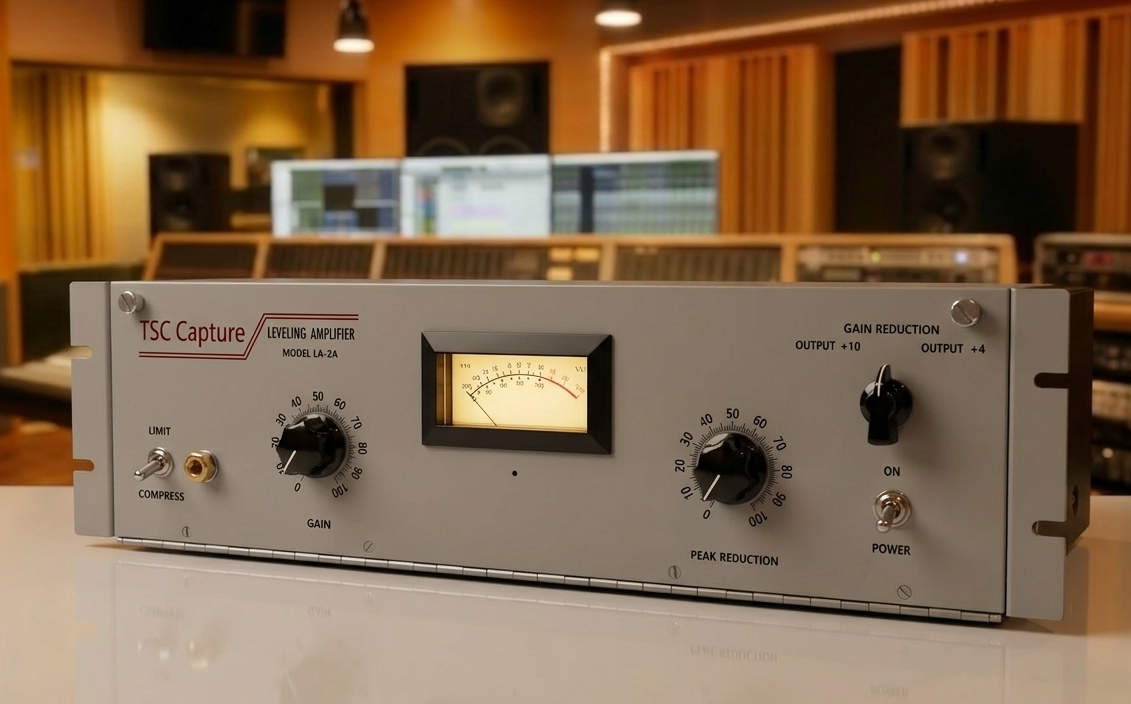
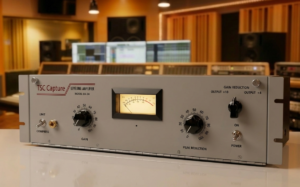
LA-2A Optical Compressor
Natural dynamics. Effortless control. Timeless tone.
The LA-2A is not about aggressive compression — it’s about control that you don’t notice.
Its optical design responds in a smooth, program-dependent way, gently shaping dynamics while preserving the performance.
What you actually get
A set of LA-2A profiles captured at different gain reduction levels and modes.
Profiles included:
- LA-2A Leveling – Light
Subtle control with natural transparency. - LA-2A Classic – Medium
Balanced compression with smooth glue. - LA-2A Classic Vocal
Forward vocals with polished clarity. - LA-2A Heavy Vocal – Strong
Firm control with bold vocal presence. - LA-2A Thick Compression
Dense, warm, and full-bodied tone.
How it behaves
- Transients are softened, not crushed
- Sustain is naturally extended
- Gain reduction adapts to the signal
Audio Demo
Hear the before and after across a range of sources — vocals, drums, guitar, synth, and more.
Each example uses the same profile to show how it reacts to different material.
All examples are gain-matched for a fair and accurate comparison.
Focus on subtle changes in clarity, depth, and overall tonal balance rather than overall loudness.
Why this capture is different
- Controlled gain reduction targets
- Consistent calibration
- Real-world usage in mind
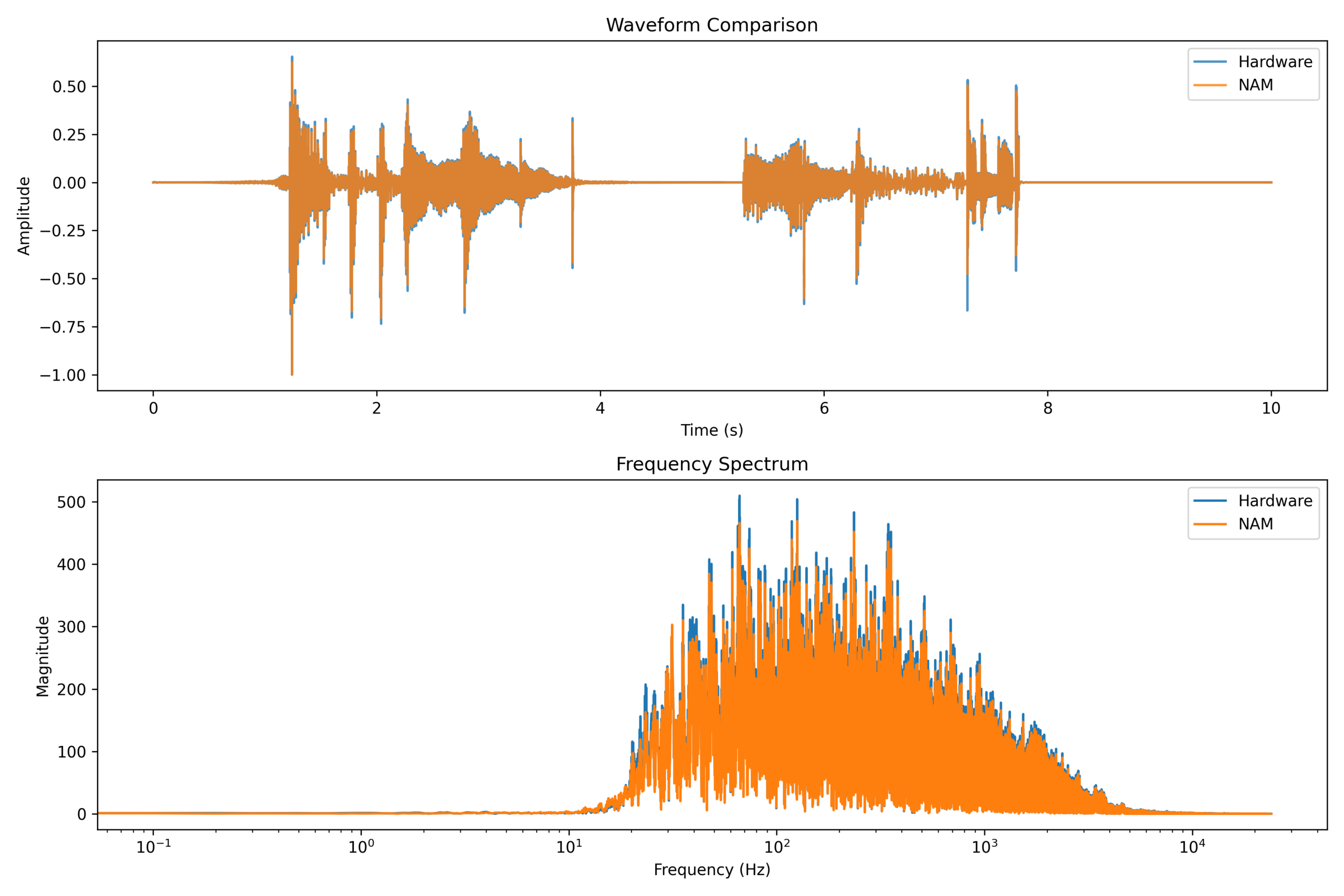
Waveform Comparison (Hardware vs NAM)
Below is a direct comparison between the original hardware signal and the NAM profile output.
This visualization highlights how accurately the dynamics and response are preserved.
Technical notes
- Format: NAM (.nam)
- Sample Rate: 48kHz
- Capture Type: Real hardware
- Calibration: Studio-level gain staging
Gain Staging Advice
Our captures are pre-calibrated at -18 dBFS input level.
For best results, we recommend feeding the plugin with an input signal close to -18 dBFS.
Due to gain reduction during the profiling process, the output level of a loaded profile may be slightly lower than the original input signal.
Please adjust the Output control to match your source level or to reach your preferred listening volume.
When evaluating tones, keep in mind that louder signals can often be perceived as better simply due to increased loudness.
For the most accurate comparison, we strongly recommend proper gain matching. Developing this habit is essential for critical listening and consistent mixing decisions.
Disclaimer
This product consists of digital NAM profiles and impulse responses captured from real hardware.
All products are independently developed by TSC (Tokyo Studio Capture) and are not affiliated with, endorsed by, or officially connected to any hardware or software manufacturers.
Any product names, references, or visual elements are used strictly for descriptive purposes only. All trademarks and brand names are the property of their respective owners.
Leave a Review
If you found this profile useful, we’d really appreciate your feedback.
Leave a review and receive a discount coupon for your next purchase.
Reviews
There are no reviews yet