
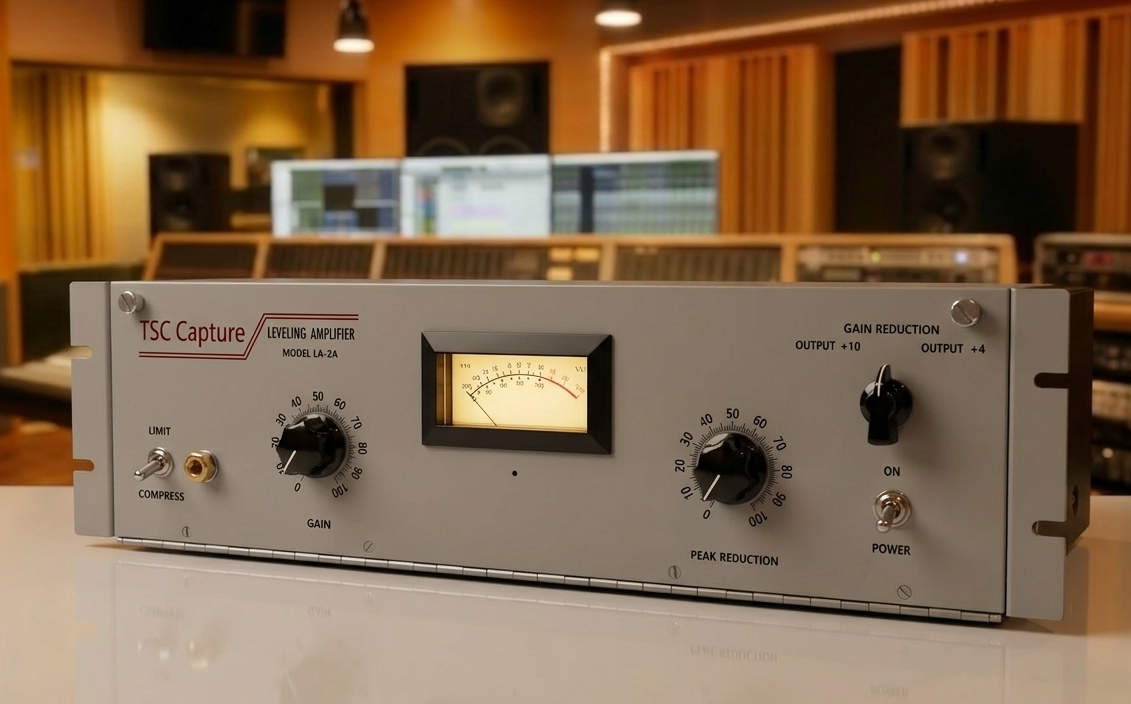
LA-2A Optical Compressor
Natural dynamics. Effortless control. Timeless tone.
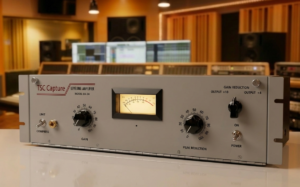
The LA-2A is not about aggressive compression — it’s about control that you don’t notice.
Its optical design responds in a smooth, program-dependent way, gently shaping dynamics while preserving the performance.

Experience These Profiles with TSC Rack
To get the most out of these profiles, we recommend using TSC Rack — our original plugin designed specifically for Tokyo Studio Capture profiles.
TSC Rack fully supports the latest NAM A2 architecture, delivering the highest level of accuracy currently available, while also providing seamless True Stereo operation through independent Left and Right profile loading.
With its integrated profile browser, four processing slots, Auto Phase Calibration, Native Sample Rate Processing, and automatic profile management, TSC Rack makes working with NAM faster, simpler, and more enjoyable than ever.
New to NAM?
If you’re just getting started with Neural Amp Modeler, our step-by-step NAM Guide covers everything you need—from installing the plugin to loading your first profile.
What’s Included
A set of LA-2A profiles captured at different gain reduction levels and modes.
Profiles included:
- LA-2A – Leveling Light
Subtle control with natural transparency. - LA-2A – Classic Medium
Balanced compression with smooth analog cohesion. - LA-2A – Smooth Glue
Gentle optical compression with effortless consistency. - LA-2A – Forward
Enhanced presence with controlled dynamic focus. - LA-2A – Thick Compression
Dense, warm, and full-bodied optical compression. - LA-2A – Warm Sustain
Smooth leveling with extended sustain and warmth. - LA-2A – Tube Glow
Subtle tube coloration with minimal gain reduction. - LA-2A – Vintage Drive
Heavy optical compression with classic tube density.
Peak Reduction: 1–2dB GR
Peak Reduction: 3–5dB GR
Peak Reduction: 2–3dB GR
Peak Reduction: 5–7dB GR
Peak Reduction: 6–8dB GR
Peak Reduction: 4–6dB GR
Peak Reduction: 0–1dB GR
Peak Reduction: 10–15dB GR
Audio Demo
Compare the original hardware signal and the NAM profile across a range of sources — bass, guitar, synth, and more.
Each example demonstrates how closely the profile captures the tone, dynamics, and harmonic response of the hardware.
The NAM and hardware samples are gain-matched to allow for a more accurate evaluation of the capture’s fidelity.
For additional context, a dry (unprocessed) version is also included.
Why this capture is different
- Controlled gain reduction targets
- Consistent calibration
- Real-world usage in mind
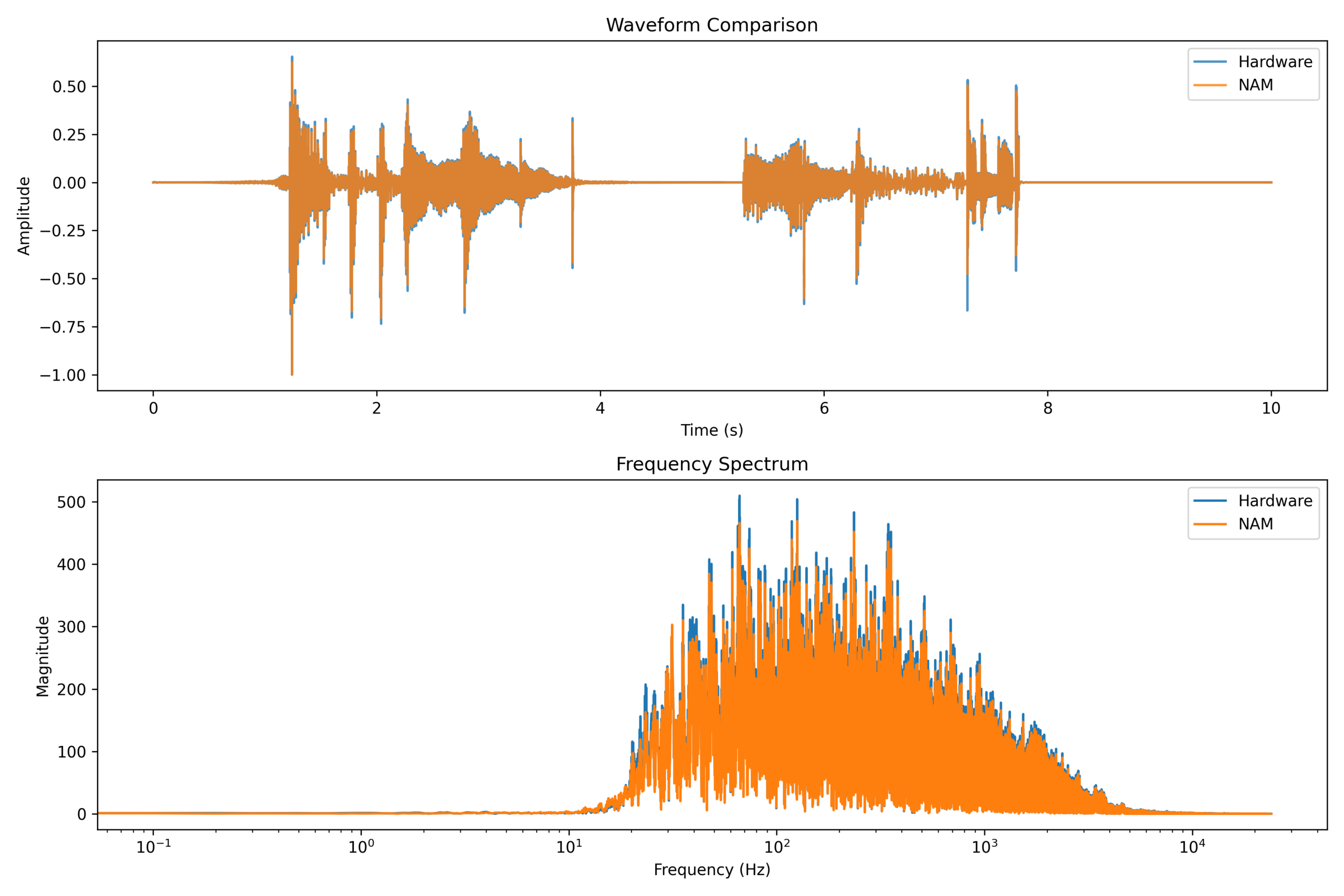
Waveform Comparison (Hardware vs NAM)
Below is a direct comparison between the original hardware signal and the NAM profile output.
This visualization highlights how accurately the dynamics and response are preserved.
Technical notes
- Format: NAM (.nam)
- Sample Rate: 48kHz
- Capture Type: Real hardware
- Calibration: Studio-level gain staging
Gain Staging Advice
Our captures are pre-calibrated at -18 dBFS input level.
For best results, we recommend feeding the plugin with an input signal close to -18 dBFS.
Due to gain reduction during the profiling process, the output level of a loaded profile may be slightly lower than the original input signal.
Please adjust the Output control to match your source level or to reach your preferred listening volume.
Disclaimer
This product consists of digital NAM profiles and impulse responses captured from real hardware.
All products are independently developed by TSC (Tokyo Studio Capture) and are not affiliated with, endorsed by, or officially connected to any hardware or software manufacturers.
Any product names, references, or visual elements are used strictly for descriptive purposes only. All trademarks and brand names are the property of their respective owners.
Leave a Review
If you found this profile useful, we’d really appreciate your feedback.
Leave a review and receive a discount coupon for your next purchase.
Follow Tokyo Studio Capture
Follow us on Instagram for studio updates, behind-the-scenes content, new releases, and more.
Henri (verified owner) –
Very useful pack of profiles. These feel and sound much more natural than any plugin I have tried.
Rondini Dario (verified owner) –
It’s a great package, with all usable profiles. You can definitively hear the depth and warmth of the LA-2A, in all profiles compression is smooth and there is a lot of tube warmth.
Stephen (verified owner) –
Has an open feel just like the hardware, One can hardly tell the difference