
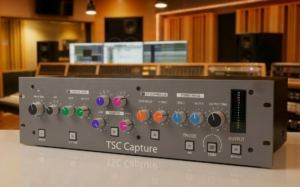
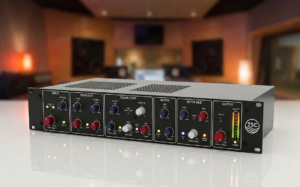
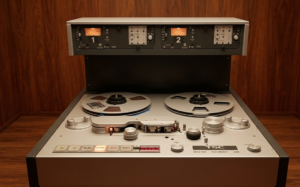
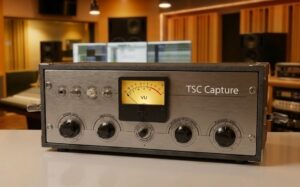
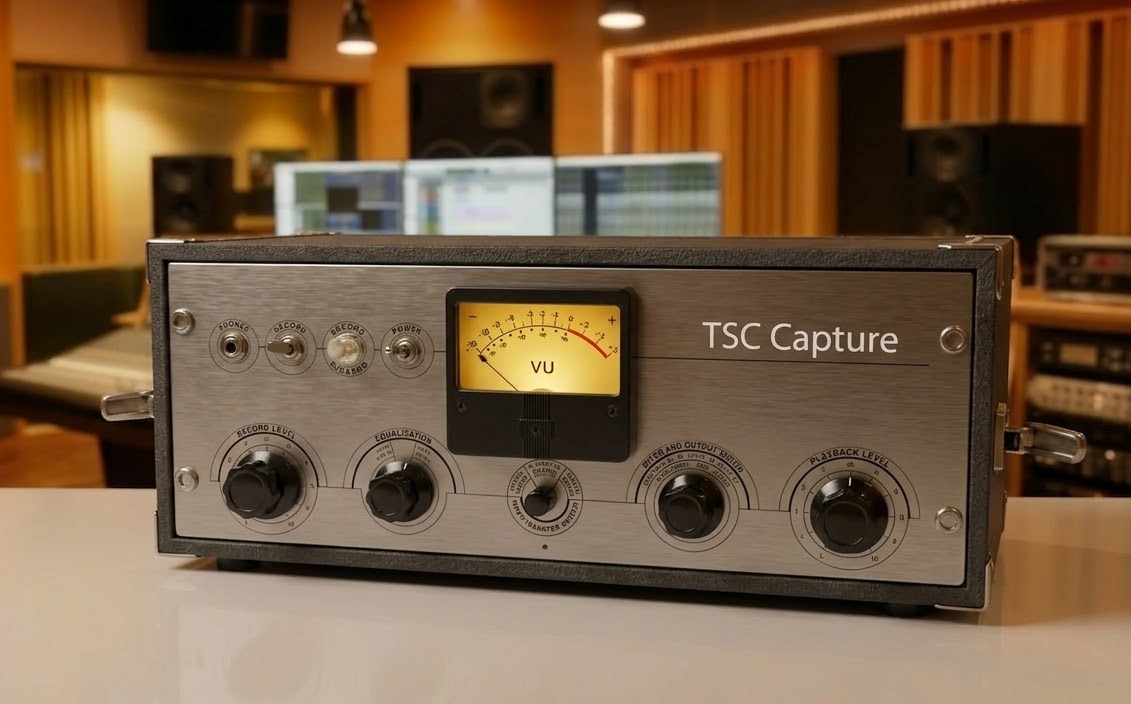
 A-PEX 351 Tape Saturation Preamp Profiles for NAM
$24.99
Saturation & Tape
Soft tape saturation that smooths transients while adding warmth, harmonic depth and timeless glue.
“I’ve been looking everywhere for a proper 351 preamp emulation and most plugins sound nothing like…”
$24.99
Analog warmth. Soft saturation. Timeless glue.
The A-PEX 351 is not about distortion — it’s about depth and cohesion.
Its tape-driven character gently saturates the signal, softening transients and adding harmonic richness, creating a sense of glue and musical balance.
TSC Ecosystem
Standard .nam files that work in any compatible NAM player. Load them into TSC Rack 2, combine them with other Captures, and use the chain directly in your DAW.
Compare the original hardware signal and the NAM profile across a range of sources — bass, guitar, synth, and more.
Each example demonstrates how closely the profile captures the tone, dynamics, and harmonic response of the hardware.
The NAM and hardware samples are gain-matched to allow for a more accurate evaluation of the capture’s fidelity.
For additional context, a dry (unprocessed) version is also included.
The hardware used for this comparison is a single-channel unit; therefore, these demos are presented in mono to reflect its original character.
The NAM profiles themselves support full stereo operation when used on a stereo track.
A set of tape saturation profiles captured at different drive levels.
Profiles included:
Our captures are pre-calibrated at -18 dBFS input level.
For best results, we recommend feeding the plugin with an input signal close to -18 dBFS.
Due to gain reduction during the profiling process, the output level of a loaded profile may be slightly lower than the original input signal.
Please adjust the Output control to match your source level or to reach your preferred listening volume.
This product consists of digital NAM profiles captured from real hardware. All products are independently developed by TSC (Tokyo Studio Capture) and are not affiliated with, endorsed by, or officially connected to any hardware or software manufacturers. Any product names, references, or visual elements are used strictly for descriptive purposes only. All trademarks and brand names are the property of their respective owners.
Studio updates, behind-the-scenes content, new releases, and more.
@tokyostudiocapture →Multi-stage analog color that adds weight, clarity and polished final-stage cohesion.
$24.99 Add to cartRefined master-bus color with added weight, dimension and a polished sense of cohesion.
$29.99 Add to cartMastering-grade tape depth, smooth transients and analog glue across both 15 and 30 ips.
$34.99 Add to cartA-PEX 351 Tape Saturation Preamp Profiles for NAM
Anonymous (verified owner) –
I’ve been looking everywhere for a proper 351 preamp emulation and most plugins sound nothing like actual unit. But this one is *it*. These A2 captures are the closest you’ll ever get to this rare unit.