
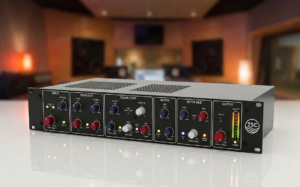
 E-LYSIA K-RCTR Discrete Saturation Profiles for NAM (Updated)
$24.99
Saturation & Tape
Precise discrete saturation ranging from subtle harmonic enhancement to bold, colorful distortion.
$24.99
Harmonic color. Controlled destruction. Creative analog attitude.
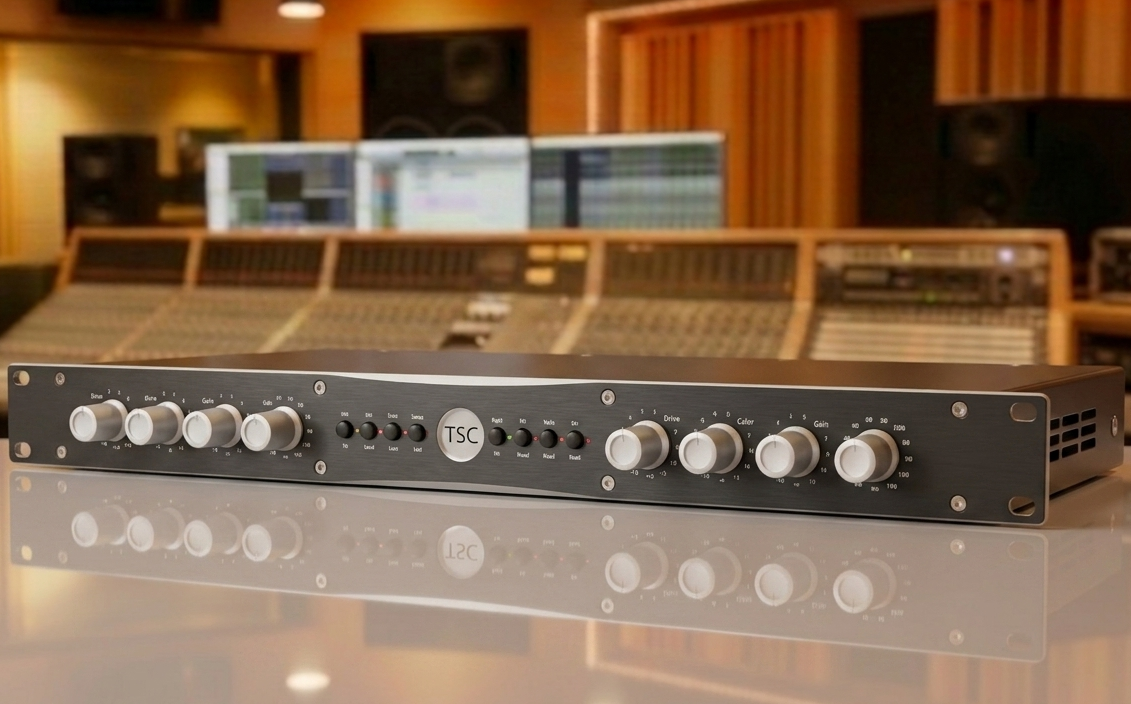
The E-LYSIA K-RCTR is not about transparent processing — it’s about shaping tone through harmonics, saturation, and aggressive nonlinear character.
From subtle analog warmth to chaotic FET-driven destruction, it delivers a wide spectrum of textures ranging from polished saturation to brutal sound mangling, all while maintaining a uniquely musical response.
Now updated with independently captured Left and Right channel profiles for authentic True Stereo operation using TSC Rack’s L/R Split mode.
Compare the original hardware signal and the NAM profile across a range of sources — drums, synths, guitars, vocals, and more.
Each example demonstrates how closely the profile captures the harmonic behavior, transient response, and nonlinear saturation characteristics of the hardware.
The NAM and hardware samples are gain-matched to allow for a more accurate evaluation of the capture’s fidelity.
For additional context, a dry (unprocessed) version is also included.
A collection of K-RCTR saturation profiles captured across multiple drive stages, saturation modes, and harmonic textures.
Profiles included:
True Stereo Operation
The original hardware features independently operating channels, each with its own unique analog behavior and subtle sonic characteristics.
To preserve this authenticity, every profile pair was captured independently from each channel of the original hardware.
Unlike conventional stereo processing, the Left and Right channels are not duplicated. Each profile retains its own unique analog fingerprint, closely reflecting the behavior of the original unit.
For the intended experience, load the matching CH1 and CH2 profiles using TSC Rack’s L/R Split mode. This preserves the natural depth, width, and dimensionality of the original hardware.
Our captures are pre-calibrated at -18 dBFS input level.
For best results, we recommend feeding the plugin with an input signal close to -18 dBFS.
Because saturation intensity changes depending on input level, hotter signals will produce more harmonic distortion, compression, and transient shaping.
Please adjust the Input and Output controls carefully to achieve the desired amount of coloration while maintaining proper level balance.
TSC Ecosystem
Load, organize and mix your TSC captures in one streamlined NAM workflow.
Explore TSC Rack →New to NAM? Read the NAM Guide →
This product consists of digital NAM profiles and impulse responses captured from real hardware. All products are independently developed by TSC (Tokyo Studio Capture) and are not affiliated with, endorsed by, or officially connected to any hardware or software manufacturers. Any product names, references, or visual elements are used strictly for descriptive purposes only. All trademarks and brand names are the property of their respective owners.
Studio updates, behind-the-scenes content, new releases, and more.
@tokyostudiocapture →Refined master-bus color with added weight, dimension and a polished sense of cohesion.
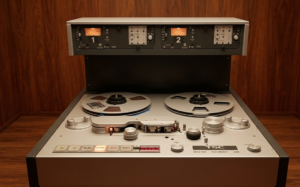
$29.99 Add to cartMastering-grade tape depth, smooth transients and analog glue across both 15 and 30 ips.
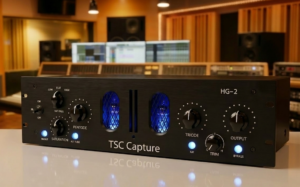
$34.99 Add to cartRich tube saturation with controllable harmonic color, depth and mix-ready density.
$29.99 Add to cartE-LYSIA K-RCTR Discrete Saturation Profiles for NAM (Updated)
Alfonso (verified owner) –
Really nice and useful saturation, i can´t compare with the hardware, but i won’t hesitate to use it on all my tracks…